IRG2: Non-equilibrium Quantum Metamaterials
ABOUT IRG2
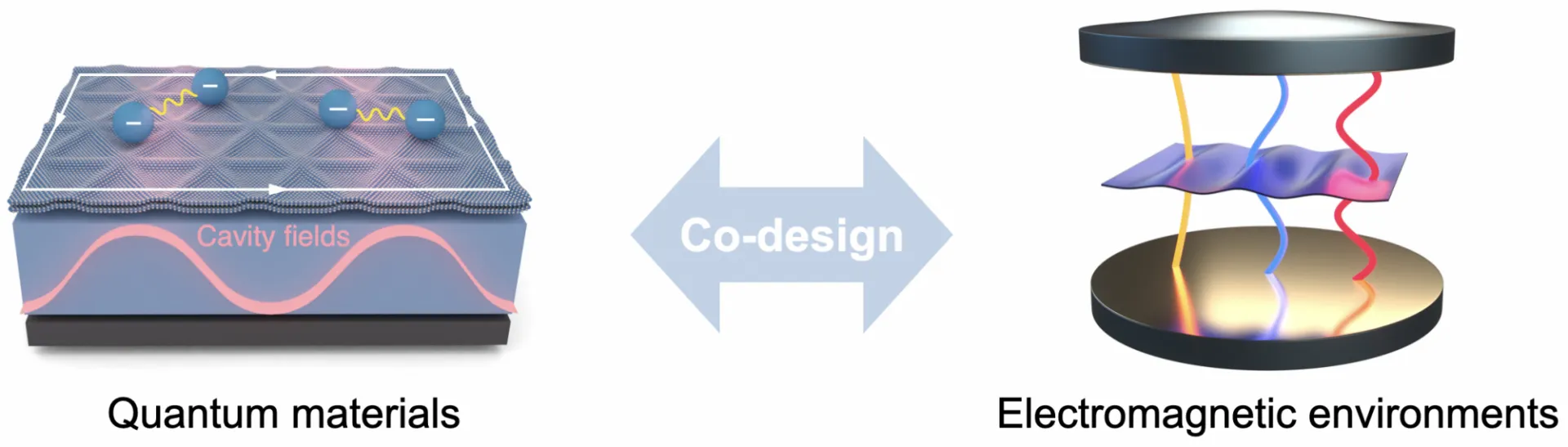
IRG2 investigates how light and engineered electromagnetic environments can control quantum phases of matter. We develop quantum metamaterials by co-designing quantum materials and their electromagnetic environments. Our goal is to modify existing quantum phases and create non-equilibrium phases with no equilibrium counterpart.
We combine 2D materials and their heterostructures, molecular crystals, and misfit layered compounds with electromagnetic cavities that strengthen coupling to electrons and lattice vibrations. By designing the materials and cavities together, we seek to control quantum phases through cavity effects without external illumination and through low-power optical driving.
Our research has two complementary thrusts:
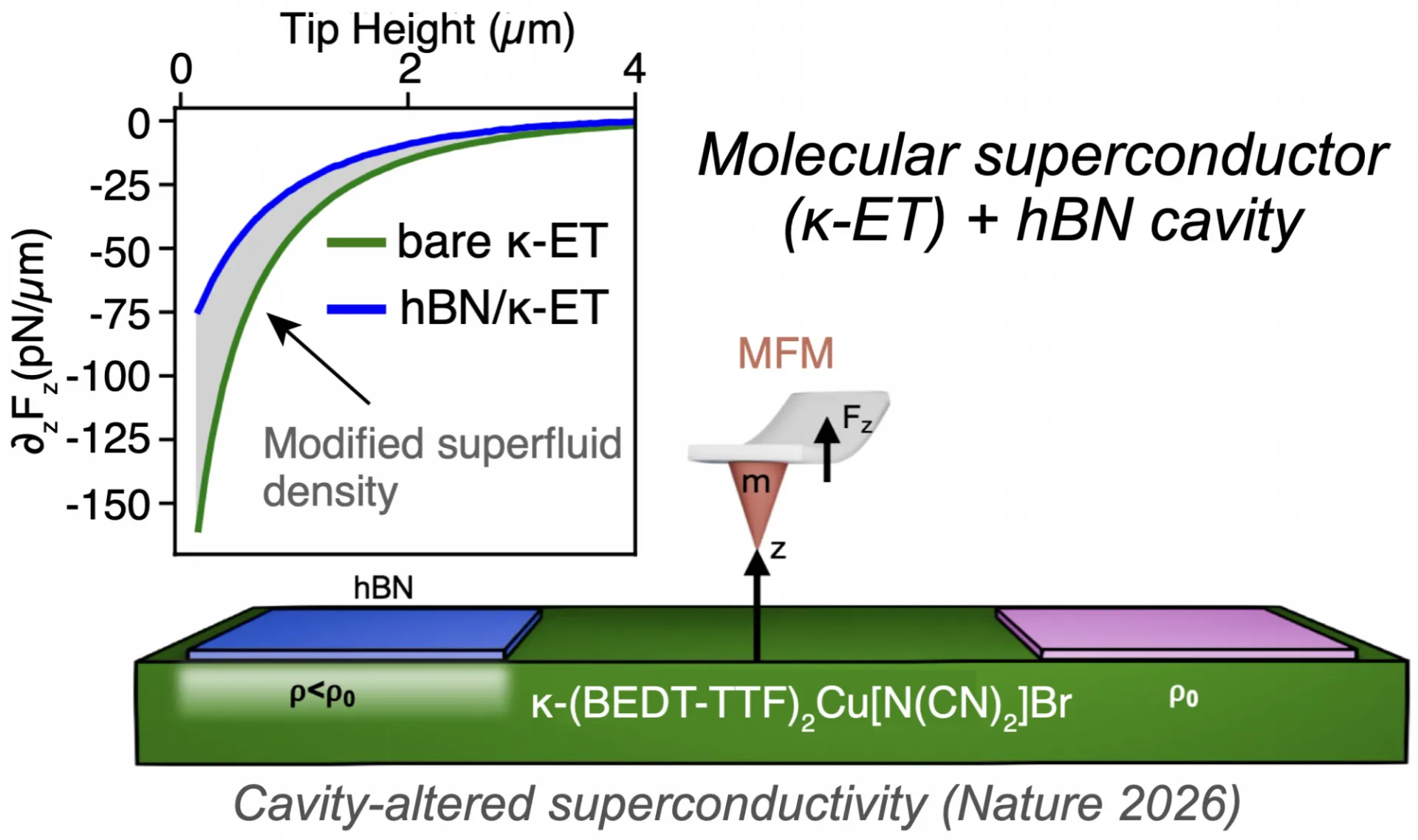
Superconducting quantum metamaterials. We investigate how electromagnetic environments modify electron pairing, superconducting stiffness and coherence, and competing phases. We combine materials synthesis, cavity engineering, and theory to understand and control these effects.
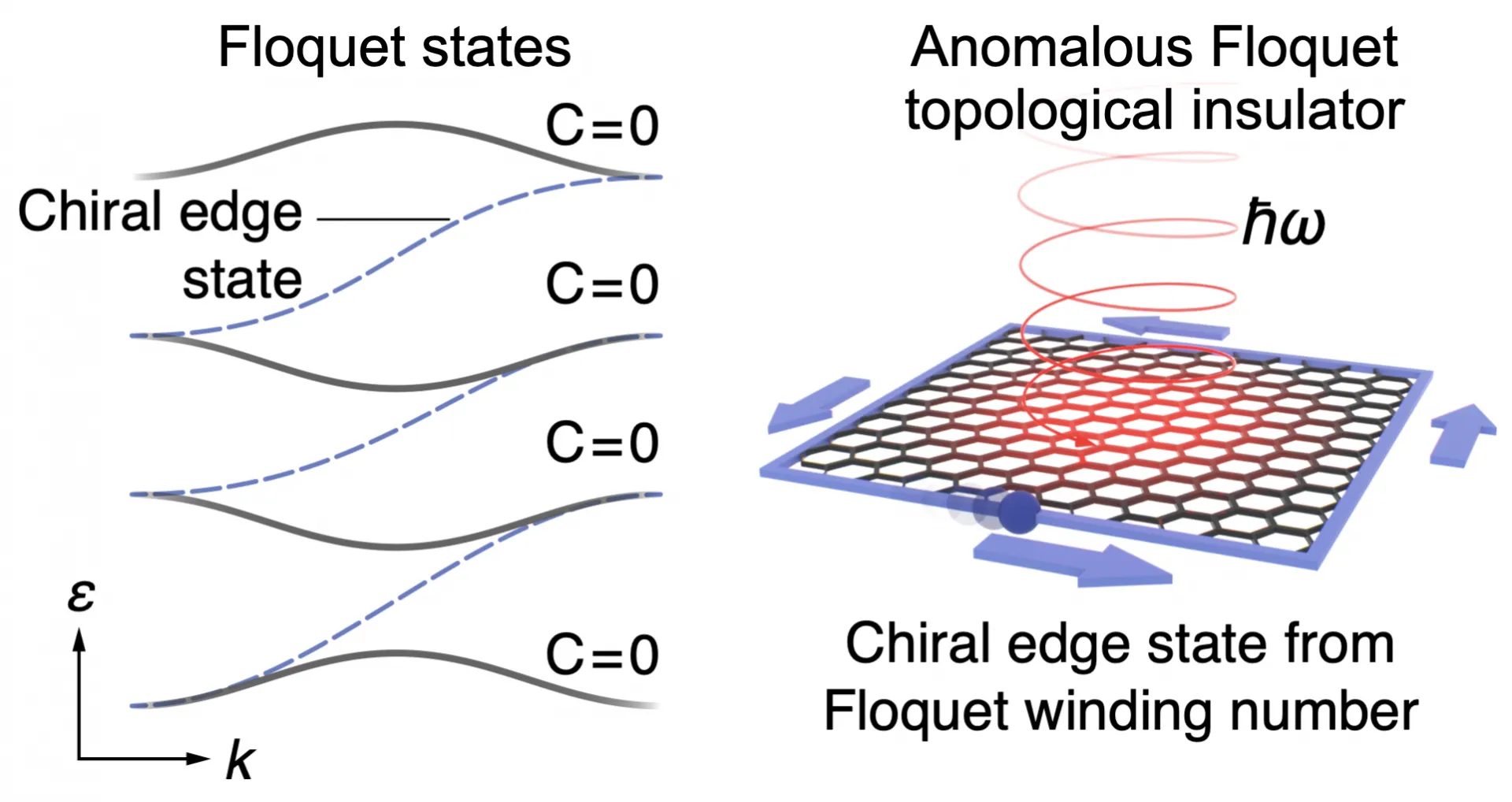
Non-equilibrium topological phases in space and time. We investigate how optical driving and electromagnetic confinement can create and stabilize topological phases. Our targets include anomalous Floquet topological phases induced by periodic driving and non-equilibrium fractional states in strongly correlated 2D materials.
Our team integrates materials synthesis, theoretical modeling, cavity engineering, ultrafast spectroscopy, transport, and nanoscale imaging. Theory guides materials and cavity design, while experiments test and refine predictive principles for controlling quantum matter.
PARTICIPANTS
Faculty Leads: James McIver, Andrew Millis
Primary Participants: Dmitri Basov, Aravind Devarakonda, James Hone, Colin Nuckolls, Abhay Pasupathy, Raquel Queiroz, P. James Schuck, Tatiana Webb (CCNY), Xiaoyang Zhu
Primary National Lab & International Participants: V. Bisogni (BNL), Y. Zhu (BNL)
Postdocs: Julian Ingham (Queiroz), Sanat Ghosh (Pasupathy)
Graduate Students: Daniel Ostrom (Pasupathy), Felix Sturm (McIver)
FOUNDATIONAL RESULTS
IRG2 is built on foundational results achieved recently by the team, including the synthesis of novel materials that exhibit desirable equilibrium properties; the demonstration of EM environment control in light-matter hybrids; and pioneering examples of non-equilibrium emergent properties.
The following publications are key to the research being conducted by IRG2:
- Cavity-altered superconductivity - Keren, et al. (Nature, 2026)
- Cavity electrodynamics of van der Waals heterostructures - Kipp, et al. (Nature Physics, 2025)
- Light-induced anomalous Hall effect in graphene - McIver, et al. (Nature Physics, 2020)
- Hidden states and dynamics of fractional fillings in twisted MoTe2 bilayers - Wang, et al. (Nature, 2025)